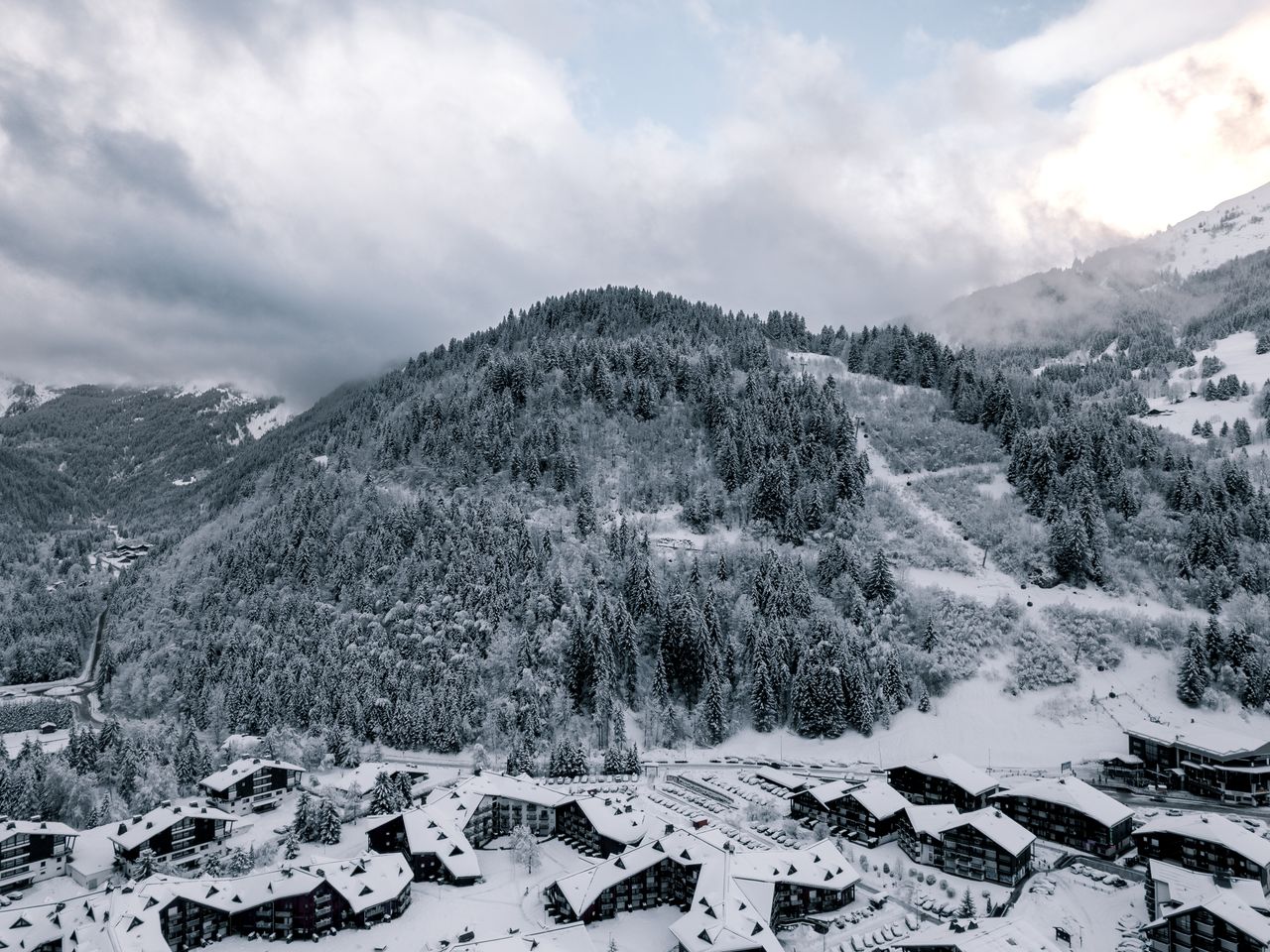
The name is an abbreviation: Monestier-de-Clermont, a village of a few thousand people in the French Alps south of Grenoble. René Ramillon founded the company there in 1952, making tents, sleeping bags and quilted hooded jackets intended to keep factory workers warm in unheated buildings.
The accidental pivot
The turn came from a mountaineer called Lionel Terray, who was consulting for the company. The story goes that Terray noticed the workers' jackets being worn by staff on their way up to the slopes and pointed out the obvious: these were better mountain garments than most actual mountain garments.
Moncler launched a line under his name, and by 1954 was supplying the Italian expedition to K2 — the same expedition that put down insulation on the map. In 1968 it became the official supplier to the French national ski team at the Grenoble Olympics.
By this point the brand had a coherent identity: serious technical equipment, made in the Alps, worn by people doing genuinely difficult things.
The paninari
Then something strange happened in Milan in the mid-eighties. A youth subculture known as the paninari — named after the sandwich bars they gathered in — adopted brightly coloured Moncler puffers as their uniform, paired with designer jeans and Timberlands.
It was the Italian parallel to what was happening simultaneously in New York, and it had the same effect: the jacket's meaning detached from its function. Moncler became, briefly and accidentally, a fashion brand.
The company did not really understand this, and did not capitalise on it. Through the nineties it drifted, caught between a technical market it was losing to specialists and a fashion market it did not know how to serve. By the early 2000s it was in serious financial trouble.
Ruffini, 2003
Remo Ruffini bought Moncler in 2003. His analysis was, in retrospect, obvious and at the time heretical: the brand's value was not in the technical performance. It was in the fact that the puffer had already become culturally loaded — a status object — and nobody was serving that demand at the top of the market.
So he stopped competing on fill power and started competing on desirability. Prices went up, distribution narrowed, and the product moved from sports shops to standalone boutiques on the most expensive streets in the world.
Ruffini did not make the jacket better. He made it mean more — and then charged for the meaning.
Genius
The clearest expression of the strategy arrived in 2018 with Moncler Genius, which replaced the conventional seasonal calendar with a rotating roster of designers — Pierpaolo Piccioli, Craig Green, Simone Rocha, Hiroshi Fujiwara and others — each given a puffer and told to do whatever they wanted.
Piccioli's collection, a set of couture puffers in enormous saturated volumes, is genuinely one of the more beautiful things anyone has done with the format. Craig Green's looked like inflatable architecture. The results ranged from sublime to unwearable, which was rather the point.
Commercially it worked because it solved the fundamental problem of a one-product luxury house: how do you make people buy a fifth version of a garment they already own? You make each one a different cultural object.
What it costs
It is worth being clear-eyed. A Moncler Maya is a well-made jacket with good down and excellent finishing. It is not four times warmer than a Patagonia at a quarter of the price, because that is not what you are paying for.
The counter-argument is that classic Moncler holds resale value better than almost anything else in outerwear, and that the construction genuinely does last decades. If you want the object, buy the object — just do not let anyone convince you it is a performance purchase.
From a workshop making quilted jackets for people in cold sheds to a company valued in the tens of billions: it is one of the strangest trajectories in fashion, and it happened because someone finally noticed that the jacket had stopped being about the cold.